Pekalongan batik maker
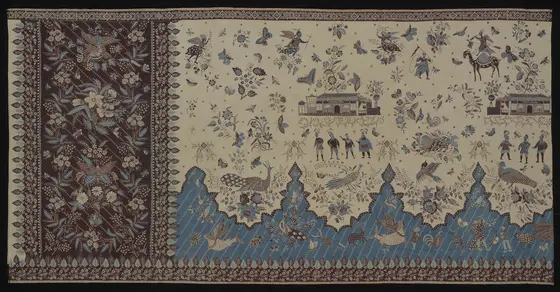
The batik sarong shown here was made about 1900 by an unknown artisan in Pekalongan, on the north coast of Java, Indonesia.
Batik is a way of dyeing cloth that uses wax as a resist, and the word also names the patterned textiles made that way. Wax is drawn or stamped onto the fabric to keep the dye out of those areas; once the wax is removed, the undyed areas show as a pattern. Artisans can repeat the cycle of waxing and dyeing several times to build up detailed patterns in more than one color. Patterns and motifs vary widely, even within a single country. Some carry symbolic meaning and are kept for particular occasions, while others were designed to meet market demand and changing fashions.
This sarong was made by batik tulis, in which the wax is drawn onto the cloth by hand. It is a tubular skirt of cotton in plain weave.
The sarong measures 213.4 by 107 centimeters (84 by 42 1/8 inches). It came to the Art Institute of Chicago as a gift of the E. M. Bakwin Indonesian Textile Collection (accession number 2002.981) and is part of the museum’s Textiles department.
1 work on Morning Masterpiece