Diné weaver
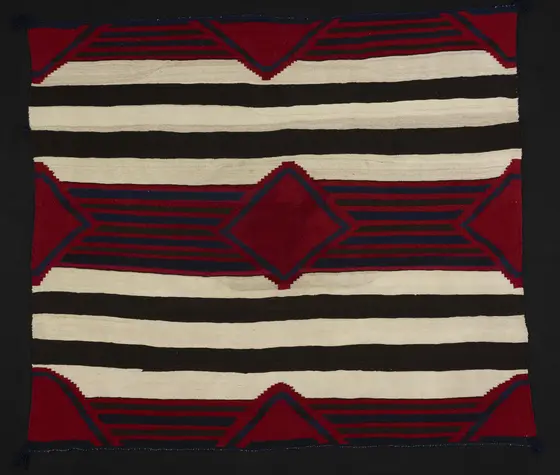
The Chief Blanket (Third Phase) is a wool blanket made by a Navajo (Diné) weaver in about 1860–65 in the Navajo Nation, in Arizona, New Mexico and Utah. The weaver’s name is not known.
Navajo weaving is the work of the Navajo people, who are based near the Four Corners area of the United States. Their textiles are highly regarded and have been sought after as trade goods for more than 150 years. The commercial production of handwoven blankets and rugs has been an important part of the Navajo economy. One art historian has written that classic Navajo serapes, at their best, match the delicacy and sophistication of any textile woven anywhere in the world before mechanical looms.
The blanket is woven in a single interlocking tapestry weave. Its edges are twined, and it has tassels at its corners.
The blanket measures 149.6 by 173.9 centimeters (58 7/8 by 68 1/2 inches). The Art Institute of Chicago acquired it through the Robert Allerton Endowment (accession number 2001.151). It is part of the museum’s Textiles collection.
1 work on Morning Masterpiece